
Shopify Return Fraud in 2026: The Photo Evidence Gap Nobody Filled
Shopify's free built-in returns flow has no photo upload field, so merchants using it collect damage evidence by email or not at all. Returns apps that do collect photos — AfterShip, Loop — do not analyse them, and gate the API access needed to inspect them behind plans starting at $99–$155 per month.
Does Shopify's native returns flow collect damage photos?
No. Shopify's built-in self-serve returns are free, well designed and used by most small merchants — and the customer-facing form collects a return reason and an optional note, with no field to attach a photo. This is confirmed in Shopify's own returns documentation and by an open merchant feature request on the community forum asking for exactly this, still unanswered as of June 2026.
The practical consequence: merchants who want photo evidence ask for it over email, after the return request already exists. That costs a round trip, arrives as a screenshot or a chat forward with the original file's metadata already destroyed, and lands in an inbox rather than beside the return it belongs to.
Do the paid returns apps solve it?
They solve collection. They do not solve verification — a distinction that matters a great deal when the photos being collected can be fabricated in seconds.
| Tool | Collects photos | Analyses them | Cost of API access to them |
|---|---|---|---|
| Shopify native returns | No | No | Free — but there is nothing to access |
| AfterShip Returns | Yes | No | $99/month (Premium tier) |
| Loop Returns | Yes | No | $155/month (Essential tier) |
| Behavioural scoring tools | Not applicable | Scores the customer, not the image | Varies |
| Enterprise claim decisioning | Yes | Partially | Enterprise pricing |
The gap is specific and easy to state: nobody in the affordable tier examines the photo itself. Behavioural tools flag serial returners, which is a different fraud and is defeated by a fresh account. Logistics platforms store the image and pass it to you unexamined. The one question that decides a damage claim — is this picture real? — goes unanswered at every price point a small merchant can reach.
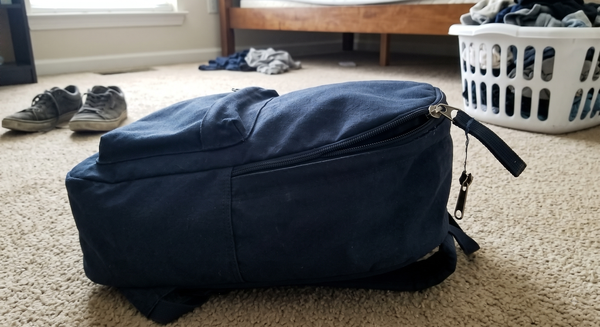
Why do small merchants get targeted specifically?
- They refund without requiring the item back. Return shipping on a $74 item eats the margin, so "keep it, here's your refund" is standard practice — and it is exactly the outcome a fake photo is designed to produce.
- One person reviews everything. There is no fraud analyst, no second reviewer, and no time budget per claim.
- Reputation pressure is asymmetric. One angry review over a refused refund hurts a 200-order store far more than a 200,000-order one, so the safe move is always to approve.
- No forensic layer exists in their stack. The photo is judged by eye, and the eye misses good fakes about three times out of four.
What would actually close the gap?
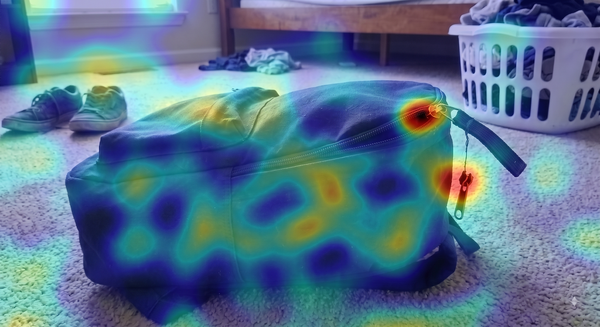
Three things, in this order. First, collect the photo inside the return flow rather than over email, so the original file arrives intact and attached to the right return. Second, run mechanical checks on every photo automatically — metadata, error level analysis, noise residual, frequency artefacts, duplicate hashing — because doing that by hand on every claim is not realistic. Third, show the merchant the working: the original image, the heatmap of the suspicious region, and a plain-English reason, so the decision belongs to a person who can defend it to the customer.
The economics are not the obstacle. Cloud classification of an image costs fractions of a cent — around $0.006 per image at Hive AI's self-serve rate — and the local forensic checks are free and open source. A tool that stops one fraudulent $50 refund a month pays for itself several times over. The reason this does not exist yet is that it sits between two markets: too forensic for a logistics platform, too small for an enterprise fraud vendor.
Frequently asked questions
Can I add a photo upload to Shopify's native return form?
Not to the native form itself — Shopify exposes no injection point inside it. The supported route is a Customer Account UI Extension that renders your own return page, or one that asks for the photo immediately after the native form is submitted. Both are official Shopify extension targets.
Is a returns app worth it just for photo collection?
If you are already paying for returns logistics, the photo collection comes along with it. Paying $99/month purely to receive photos you then have to judge by eye is a poor trade for a store doing a handful of returns a week.
Does behavioural fraud scoring catch AI photo fraud?
Rarely. Behavioural tools flag patterns in customer history — serial returners, mismatched addresses — and a first-time buyer submitting one fabricated photo produces no such pattern. They also generate false positives on genuinely unlucky good customers.
How many Shopify stores are affected?
Around 4.4 million stores are active on Shopify, and the majority of small ones use the free native returns flow, which collects no photos. The affected group is any store that approves refunds on the strength of a customer-supplied image.
Sources
About the author
Arijit Mandal — Founder, Sorquil. Builds return-fraud tooling for Shopify merchants. Spent August 2026 collecting and re-testing real AI-edited damage photos from public refund-scam reports before writing a line of detection code. [email protected]