
AI-Generated Fake Damage Photos: The Refund Scam Hitting Online Stores in 2026
An AI fake damage refund scam is when a buyer takes a real photo of a product they received intact, uses an AI image editor to add a crack, tear, stain or dent to it, and submits that edited photo as proof to claim a refund. The product is never damaged and usually never returned.
What is an AI fake damage refund scam?
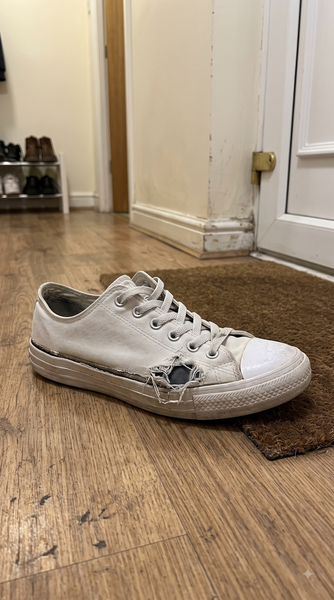
A buyer orders a product. It arrives in perfect condition. They photograph it, open any of the hundreds of free AI image tools, and type a prompt like "add a crack to this mug" or "make the fabric look torn and stained." Seconds later they have a photorealistic image of damage that never happened. They send it to the seller as proof and ask for a refund — and because the item is "damaged," most small sellers refund without asking for it back.
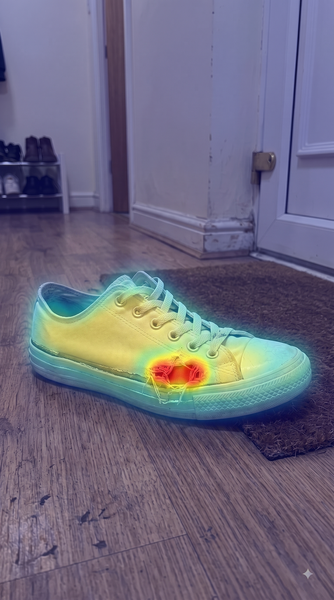
The important technical detail, and the one most coverage gets wrong: this is not a fully AI-generated image. It is a genuine camera photo with one region repainted. The lighting, the background, the carpet, the shadows and usually the camera metadata are all real. Only the damage is synthetic. That distinction decides everything about how you catch it.
Why is this happening now?
| Factor | What changed |
|---|---|
| Tool access | Editing a photo convincingly used to need Photoshop skill. It now needs one sentence typed into a free app. |
| Organised fraud | "Refund-as-a-Service" groups on Telegram and Discord sell ready-made kits, including the prompts that work on specific return portals. |
| Human limits | Reviewers fail to spot high-quality AI fakes about 75% of the time. Fatigue makes it worse: the tenth claim of the day gets less scrutiny than the first. |
| Automation blind spot | Return portals were built before generative AI existed. They collect photos; none of them examine them. |
| Platform gap | Shopify's free built-in returns flow has no photo upload field, so evidence arrives by email and gets judged by eye. |
Is there real evidence this is happening, or is it hypothetical?
It is documented, publicly, by the sellers it happened to. These are the strongest first-hand reports found while researching this problem in August 2026 — all of them are seller accounts of the scam, not marketing material:
| Where | What the seller reported | Engagement |
|---|---|---|
| r/ShopeePH | Buyer submitted damage photos that still carried a visible Gemini AI watermark. The boxes in the same photos were completely intact. | 2,425 upvotes · 200 comments |
| r/vinted | Buyer sent an AI-generated photo of a large rip in a hoodie to claim a refund — then re-listed that same hoodie, in perfect condition, on their own profile. | 999 upvotes · 119 comments |
| r/vinted | Seller demonstrated how quickly AI tools fake damage on a real item, as a warning to other sellers. | 567 upvotes · 50 comments |
| r/coins (eBay) | Buyer used an AI-generated image of a coin to open a claim. eBay sided with the buyer. | 180 upvotes · 44 comments |
How much money is actually at stake?
Return fraud as a category is enormous: the National Retail Federation reports that around 58% of retailers experience return fraud, and e-commerce losses to it run into the tens of billions of dollars annually. AI-faked photo evidence is not the whole of that number — it is the newest and fastest-growing slice of it.
For an individual small store the arithmetic is simpler and more painful. A single approved fake claim on a $145 pair of sneakers costs you the product, the refund, and the original shipping. Three of those a month is $435 gone against margins that are usually thinner than the refund itself. Most merchants never learn which of their approved claims were fake, because a refund granted is a case closed.
Why is an AI-edited photo harder to detect than an AI-generated one?
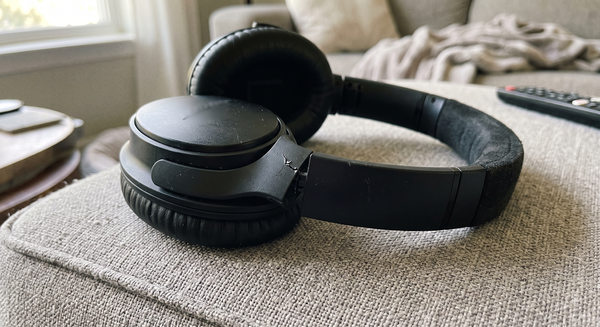
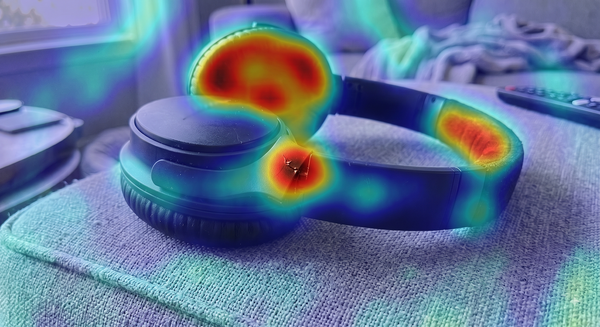
Most "AI image detector" tools are trained to answer a different question: was this entire picture made by a model? A refund-fraud photo is 95% real camera pixels with a synthetic patch in the middle, so the signals those tools look for are diluted across an image that is mostly genuine.
The gap is measurable. In independent evaluation, a detector trained primarily on fully AI-generated images correctly identified only about 55 out of 100 locally edited images — barely better than a coin flip on exactly the fraud pattern that matters here. Any vendor quoting you "99% accuracy" is almost certainly quoting a whole-image benchmark and not this one.
The workable answer is not one detector but a stack of independent signals that fail in different ways: metadata checks, recompression analysis, frequency-domain artefacts, noise-residual maps, duplicate-image matching, and a model score on top. Any single one is beatable. Passing all six at once, on the same region of the same photo, is hard. We break these down step by step in How to spot an AI-edited damage photo.
What should a merchant do about it today?
- Always require a photo, and require it inside your return flow rather than over email — an emailed screenshot has already lost the original file's metadata.
- Ask for the original file, not a screenshot. Screenshots strip the camera metadata that makes verification possible, and "my phone only had a screenshot" is itself a signal.
- Ask for a second angle, taken now, with a piece of paper in frame. Editing one photo convincingly is easy. Editing two consistent photos of the same fake damage is much harder.
- Keep every submitted photo. Repeat offenders resubmit the same image across orders and stores; you cannot spot that if you delete the evidence.
- Always offer the physical return path. "Send it back and we'll refund on arrival" ends a fraudulent claim quietly and costs an honest customer nothing.
- Never decline on a hunch alone. Document the technical reason, keep the report, and give the customer a route to resolve it.
Frequently asked questions
Can you tell an AI-edited damage photo just by looking at it?
Usually not. Human reviewers miss high-quality AI fakes about 75% of the time, and the edits that reach merchants are the ones that already survived the fraudster's own eye test. Obvious tells — a visible AI watermark, damage that stops at a straight edge, shadows that do not match — do show up, but their absence proves nothing.
Does removing EXIF metadata mean a photo is fake?
No. Every major messaging app and social platform strips metadata when it re-encodes an image, so a missing camera tag is normal for a photo that reached you through WhatsApp or Instagram. It is one signal among several, never a verdict on its own.
Do free AI image detectors work on refund photos?
Poorly, for this specific case. Most are trained on fully AI-generated images, and independent testing found that kind of detector catches only around 55% of locally edited photos. Tools that do region-level or localized-edit analysis are the relevant category.
Is asking for the item back a good alternative?
Yes, and it is the single strongest defence available to any merchant right now. A fraudulent claim rarely survives a return label, because there is no damaged item to send. The trade-off is the shipping cost on genuine claims, which is why most merchants apply it selectively.
Does Shopify detect fake return photos?
No. Shopify's built-in returns flow does not collect return photos at all — there is no upload field in the native customer flow — so there is nothing for it to analyse. Merchants collect that evidence themselves, by email or through a paid returns app.
Sources
- r/vinted — seller reports of AI-faked damage claims
- r/coins — eBay AI-generated coin image claim
- National Retail Federation — retail return fraud research
- Shopify Help Center — returns and self-serve returns
- Independent evaluation of AI-image detectors on locally edited images (academic, 2026)
About the author
Arijit Mandal — Founder, Sorquil. Builds return-fraud tooling for Shopify merchants. Spent August 2026 collecting and re-testing real AI-edited damage photos from public refund-scam reports before writing a line of detection code. [email protected]